Organic search is one of the most powerful — yet underleveraged — tools in higher ed marketing. It doesn’t just drive traffic; it shapes the entire prospective student journey, from first contact to final ‘submit.’
To see how top universities are using (or neglecting) this channel, we analyzed the organic search performance of 54 top universities using SEMrush data. We looked at traffic volume, branded vs. non-branded keyword performance, and keyword intent, breaking down where schools show up in the funnel and where they fall short.
The data revealed some clear front-runners, a few surprises, and a whole lot of missed opportunities. Some universities are pulling in millions of visits a month from prospective students, while others are barely registering. And keyword strategy, especially around high-intent queries, turns out to be a key differentiator.
Below, we’ve laid out the biggest insights from the study. Want the full dataset? We’ve got that, too — download a free copy here.
What the top 10 performers in non-branded search have in common…
Let’s start things off by talking about the top 10 universities in the U.S. when it comes to non-branded traffic. Boston University leads the pack by a wide margin, pulling in more than 11 million monthly visits from non-branded search terms. That’s more than triple the next-highest school, the University of Florida. But what’s driving this kind of visibility?
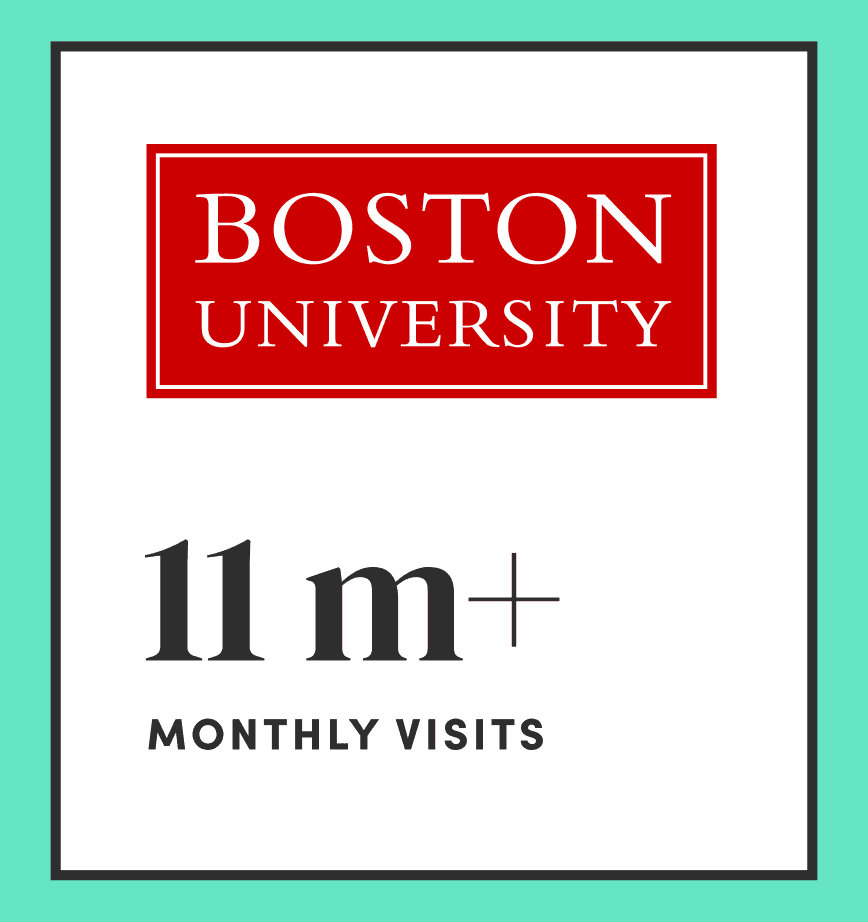
Interestingly, it’s not an over-index on commercial or transactional intent. BU’s commercial and transactional keyword mix (12% and 9%, respectively) is right in line with the rest of the top performers. In fact, across the entire top 10, commercial intent stays tightly clustered between 11%–15%, and transactional between 7%–11%.
This tells us something important: High-performing institutions aren’t winning on search because they chase commercial or transactional volume alone. They’re winning through scale, consistency, and content depth. These universities have built large ecosystems of content that capture prospective students at every stage of their journey, not just the decision point.
| Rank | University | Non-branded Search Traffic | % Commercial | % Transactional |
|---|---|---|---|---|
| 1 | Boston University | 11,001,000 | 12% | 9% |
| 2 | University of Florida | 3,100,000 | 15% | 8% |
| 3 | University of Michigan, Ann Arbor | 3,000,000 | 11% | 7% |
| 4 | University of Madison-Wisconsin | 2,600,000 | 14% | 7% |
| 5 | UNC Chapel Hill | 1,800,000 | 12% | 8% |
| 6 | University of Texas at Austin | 1,700,000 | 11% | 10% |
| 7 | University of Southern California | 1,500,000 | 12% | 11% |
| 8 | University of Illinois Urbana-Champaign | 1,500,000 | 13% | 8% |
| 9 | Northeastern University | 1,400,000 | 14% | 10% |
| 10 | Southern New Hampshire University | 1,300,000 | 15% | 8% |
SNHU, known for its online-first model, also makes the list, reinforcing the idea that smart, strategic digital marketing can help universities punch above their weight.
…And what the bottom performers are missing
Now let’s look at the other end of the spectrum, the universities with the lowest non-branded organic traffic. Seattle University comes in dead last with just five visits per month from non-branded search. Yes, five. Even institutions with a bit more visibility, such as Strayer and Harvard’s online programs, are pulling under 20,000 monthly visits.
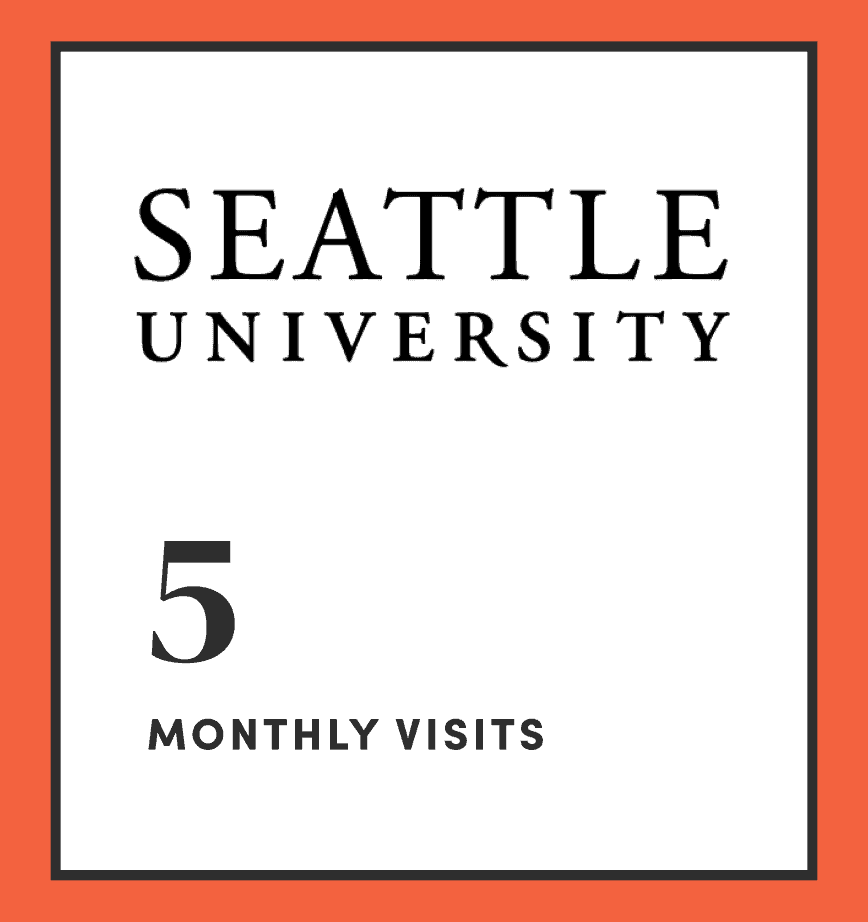
But here’s what’s striking: Many of these schools actually have relatively high percentages of commercial and transaction keywords. Logan University, for instance, has one of the highest commercial intents of any university in the study at 21%. Strayer has the highest transaction intent at 20%. And yet…their traffic is still barely registering.
Commercial and transactional intent alone won’t save a weak content strategy. Without meaningful scale, depth, and domain authority, those high-intent pages won’t rank, and they certainly won’t convert. It’s not about having the ‘right’ ratio of keyword types, it’s about having the infrastructure to support them.
| Rank | University | Non-branded Search Traffic | % Commercial | % Transactional |
|---|---|---|---|---|
| 45 | Bradley University | 49,500 | 15% | 11% |
| 46 | University of Tulsa | 49,400 | 17% | 9% |
| 47 | University of Minnesota, Twin Cities | 48,000 | 12% | 8% |
| 48 | University of Scranton | 37,300 | 11% | 14% |
| 49 | Colorado Technical University | 33,000 | 15% | 15% |
| 50 | Stetson University | 31,300 | 15% | 10% |
| 51 | Strayer University | 19,800 | 12% | 20% |
| 52 | Harvard University (Online) | 6,900 | 13% | 17% |
| 53 | Logan University | 3,900 | 21% | 11% |
| 54 | Seattle University | 5 | 2% | 17% |
What separates the top from the bottom isn’t just what kind of content they produce, but how consistently, how strategically, and how well that content is optimized and distributed.
The schools at the bottom aren’t necessarily failing because they’re targeting the wrong keywords. They’re failing because they haven’t built the visibility, trust, or content volume to compete. And in today’s search landscape, that can make all the difference.
Now, onto the insights you’ve been waiting for.
1. Informational keywords are dominating, and that’s leaving big opportunities on the table
Nearly 100% of universities in our study rank higher for informational keywords than for commercial or transactional ones. That means most organic search strategies heavily favor awareness-stage queries (think: ‘what is an MBA?’ or ‘law degree career paths’).
This approach is great for building brand awareness and catching students at the top of the funnel. But universities are also missing out on a major opportunity: creating more content for prospective students who are closer to making a decision. This ‘decision-stage’ content should answer specific, high-intent questions such as:
- ‘How do I apply for the executive MBA program?’
- ‘What scholarships are available for nursing master’s students?’
- ‘Compare top law schools for intellectual property’
By prioritizing content that provides practical information about costs, application processes, scholarships, program comparisons, and clear ‘apply now’ calls to action, you can attract and convert more of these ready-to-enroll visitors.
The bottom line: Awareness content brings prospective students in, but decision-stage content brings them home. So, why not balance your approach and capture students exactly when they’re ready to make a move?
2. Not a single university has a balanced keyword strategy
Call us crazy, but you’d think at least one university would have a well-rounded keywords strategy, right? Yet zero universities in our study have a balanced keyword profile (meaning they’re within 10% balance across informational, navigational, commercial, and transactional keywords).
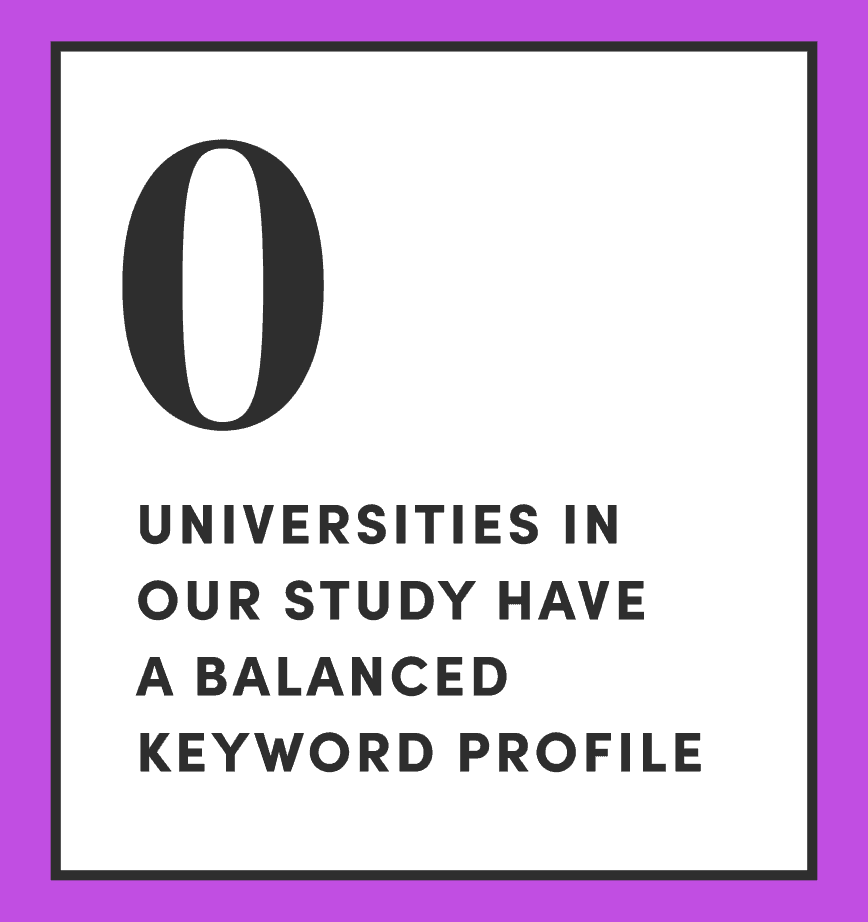
Instead, higher ed institutions overwhelmingly rely on informational or navigational queries. While it’s important to rank for ‘most popular MBA programs’ or ‘how to become a nurse practitioner,’ what about capturing prospective students who are ready to make decisions right now?
Here’s a bit of advice: Conduct a quick audit of your own content mix. Check your balance. Are you heavy on informational content and thin on transactional or commercial content, such as tuition and financial aid information or program comparisons? If so, you’re not alone, which is exactly why there’s such a big opportunity here.
A balanced content strategy can guide students more effectively down your enrollment funnel. Remember, the students who know exactly what they’re looking for are your warmest leads. Make sure your content speaks to them, too.
3. Middle-of-the-funnel keywords are the overlooked MVP of university marketing
Middle-of-the-funnel content is seriously underrepresented. Sure, most universities have dipped their toes in the commercial-intent waters, but nobody’s exactly swimming laps.
Just 3.7% of universities in our study have a commercial keyword intent below 10%, which means they’re nearly absent when prospective students start comparing programs or actively shopping around. The majority are clustered somewhere between 12%–16%. While that isn’t terrible, it isn’t exactly inspiring, either.
Students are constantly comparing programs, looking for reviews, rankings, and ROI info with queries like:
- ‘Best online MBA programs in Texas’
- ‘Top engineering schools with affordable tuition’
- ‘Law degree ROI vs. other graduate degrees’
If your school isn’t showing up for these mid-funnel searches, you’re essentially letting prospects stroll right past you and straight on to your competitors.
There’s plenty of room to improve. By doubling down on comparison-focused and evaluative content, you’ll position your programs front and center exactly when prospective students are in decision mode.
4. A more balanced keyword strategy doesn’t always translate to more traffic
Here’s something interesting: Universities with a more evenly balanced keyword intent profile actually attract less non-branded traffic. We’re talking about 238,000 visits per month on average, compared to a whopping 773,000 visits per month for all universities.
It turns out high non-branded traffic isn’t about ticking every keyword intent box equally but about having serious depth in key areas that matter most to your prospective students. So, chasing ‘balance’ across all four intents (informational, navigational, commercial, and transactional) isn’t necessarily the best path to more traffic or higher conversions.
Instead, the universities driving tons of traffic are zeroing in on content that answers the most common and valuable questions for their audience. This means highly detailed, authoritative content on key topics such as:
- Program reputation and career outcomes
- Application processes and financial aid specifics
- In-depth explorations of degree specializations or unique strengths of programs
Rather than strive for equal keyword coverage, try going all-in on what your prospects genuinely want (and need) to know. After all, depth beats breadth when it comes to standing out in search and capturing the attention of your next students.
5. 1 in 4 universities are missing the mark on transactional keywords
Nearly a quarter (24%) of traditional universities have very low transactional keyword intent (below 8%). Translation? Many schools, including well-established brands, lack meaningful content designed for students who are ready to take action.
Great informational content can educate and inspire, but without strong, clear calls-to-action (CTAs), your visitors might be left wondering, “Great — now what?”
You need pages specifically built for transactional intent. Think straightforward, persuasive content such as:
- ‘Apply to our healthcare administration program in minutes’
- ‘Request info on financial aid packages’
- ‘Enroll now for summer courses’
There’s a big gap in transactional content that’s ready to capture those eager-to-act visitors. Filling that gap with clear, action-oriented pages can directly drive leads and boost enrollment. If your site doesn’t clearly guide visitors toward taking action, you’re letting high-intent prospective students slip through your fingers.
6. Commercial content alone won’t guarantee higher traffic
You might think cranking out more commercial content is an automatic recipe for higher non-branded search traffic, but here’s the truth: Universities with a strong commercial keyword presence (over 15%) actually see lower-than-average non-branded traffic.
Commercial content is crucial, but it isn’t a silver bullet. Commercial queries such as ‘best MEd programs’ and ‘top nursing schools’ are extremely competitive; every university out there wants a piece of the action. Simply publishing more content won’t magically boost your rankings or traffic.
Instead, winning at commercial queries requires a more strategic approach:
- Depth and quality: Your comparison and program-focused pages must be detailed, thorough, and genuinely helpful. Google rewards content that fully answers user intent, not just pages stuffed with keywords.
- Search engine optimization: Optimizing metadata, internal linking structures, and page speed are table stakes. Even great content will struggle if you haven’t nailed down SEO basics.
- Promotion and authority: Earning backlinks, leveraging email and social channels, and promoting your highest-value commercial pages externally are essential strategies for driving visibility and traffic.
Commercial content is important, but its success hinges on a holistic SEO and promotional strategy. To really win in the competitive non-branded search space, pair your high-intent content with smart SEO practices and targeted promotion. Otherwise, your best pages may never see the search visibility they deserve.
7. Online-first universities are crushing commercial content (and traditional schools should take note)
An eye-opening 40% of the top five universities ranking highest for commercial intent are online-first brands. That’s right: Online universities dominate when it comes to aggressively targeting high-intent, comparison-driven queries such as ‘best online degree for working professionals’ or ‘fastest way to enroll in online criminal justice programs.’
Why does this matter? Because online universities know their audience, and they’re crafting content specifically designed to meet the needs of busy professionals looking for fast, flexible paths to enrollment.
This includes:
- Flexible learning content: Online universities clearly articulate benefits such as accelerated schedules, flexible start dates, and hybrid or fully only formats.
- Detailed comparison pages: Online universities invest in content directly comparing their programs against competitors, giving prospective students the exact information they need to choose confidently.
- Easy application pages: Online universities are pros at reducing friction with streamlined ‘apply now’ pages and straightforward enrollment processes.
Traditional universities have an opportunity here. By borrowing from the online-first playbook, you can better capture students looking for more flexible and transparent enrollment paths. It’s not about copying online schools wholesale but instead learning how to effectively position your programs to resonate with the needs of today’s learners.
If you’re a traditional university, it’s time to think like an online-first brand when it comes to commercial content. Your future students will thank you (and so will your enrollment numbers).
8. In organic search, it’s winner-take-(almost)-all
Let’s talk about the real elephant in the search engine results page: The gap between the top and bottom performers in non-branded search is massive. We’re talking 10 to 1,000 times more non-branded traffic for the leaders compared to those stuck at the bottom.
That’s not a typo. Some universities are getting literally thousands of times more organic visibility simply because they’ve invested deeply in content and SEO strategy. The higher your climb, the more exponential the returns. Why? Because organic search is a ‘winner-take-most’ game. The top results get a lion’s share of the clicks. Once you’re on page one, especially in the top three positions, you’re commanding serious attention while everyone else fights for scraps.
If your institution is in the crowded middle tier, you can’t just content your way out with more blog posts. You need:
- Focused, differentiated content that answers your most valuable searcher questions better than anyone else
- On-point SEO fundamentals, including site structure, internal linking, and technical performance
- Authority signals, such as backlinks and engagement metrics, to push your content up the rankings
Climbing the organic ladder doesn’t happen by accident. It takes strategy, consistency, and real investment. But, once you break through, the wins compound quickly.
9. Many universities’ sites are built for the students they already have
Universities with a high share of navigational keyword rankings seem to prioritize internal audiences (primarily current students). These are the schools ranking for searches like ‘university login,’ ‘library hours,’ or ‘academic calendar.’ Helpful? Absolutely — but also a sign that their content strategies might be skewed toward maintaining student services rather than attracting new ones.
If your site is packed with resources for enrolled students but light on content that speaks to prospective ones, it’s time to take a hard look at your structure. Too often, we see homepages and navigation menus overloaded with internal links, which are great for existing students, but a fast track to frustration for future ones trying to explore your programs.
This doesn’t mean you should neglect your current community, but it does mean rethinking your digital front door. Your homepage, program pages, and key pathways should make it crystal clear what you offer, who it’s for, and how to take the next step.
Prospective students are trying to find the right fit. Don’t make them hunt for it.
10. Heavy brand reliance is holding some institutions back
Some of the most well-known universities in our study are riding the wave of branded search traffic, ranking high for queries that include their own names. While that signals strong awareness, it also reveals a blind spot: They’re missing out on students who haven’t heard of them yet.
These schools may dominate searches like ‘[University Name] tuition’ or ‘[University Name] MBA,’ but they fall short when it comes to non-branded, discovery-stage queries. That means they’re not showing up for prospective students searching for terms like ‘best business degrees in Georgia’ or ‘top-ranked online MPH programs.’
The risk? By focusing too heavily on brand, these institutions lose visibility at the very top of the enrollment funnel, where students are still exploring their options and haven’t committed to any particular school.
To grow beyond your existing name recognition, build content that targets generic, high-volume queries aligned with your strongest programs and differentiators. That’s how you’ll reach entirely new audiences and get in front of students before they’ve made a shortlist. In a crowded market, the schools that show up early and offer real value have the edge.
How do Google’s AI Overviews change the SEO playbook?
Google’s AIOs are changing the way users interact with search results, often answering top-of-funnel queries directly within the search engine results page. Fast answers mean fewer clicks for purely information content, but that doesn’t make SEO any less important, it just makes it smarter.
AIOs pull from structured, authoritative, semantically rich content. In other words, if you’re executing SEO well, AIOs are more likely to use your content as a source. When universities use clear headers, keyword-aligned copy, structured data, and intent-driven content, they don’t just optimize for Google, they position themselves to be cited (and linked to) by AI tools such as ChatGPT, Perplexity, or Copilot.
But here’s where it gets even more interesting: AIOs fall short when it comes to commercial and transactional searches, which is exactly where universities need to focus. Queries such as ‘fast-track RN to BSN online,’ ‘cybersecurity certificates for career changers,’ or ‘how to apply for a masters in public policy’ can’t be answered by a quick summary. Prospective students want side-by-side comparisons, application steps, cost breakdowns, career outcomes, and more.
These are the moments that move prospects from interest to action, and they still rely on content-rich, well-structured university websites. So, while click-through rates might dip on broad informational queries, the value of ranking for high-intent, decision-stage content is only going up in the AI-first landscape.
This study offers a clear snapshot of where leading universities stand in organic search and highlights the opportunities many are missing. Download the full dataset today to see the raw numbers for yourself — and, when you’re ready to increase your own organic traffic, give the higher ed digital marketing experts at Vital a call.